consumer electronics · Buying guide
Matter and Thread Explained for Smart-Home Buyers
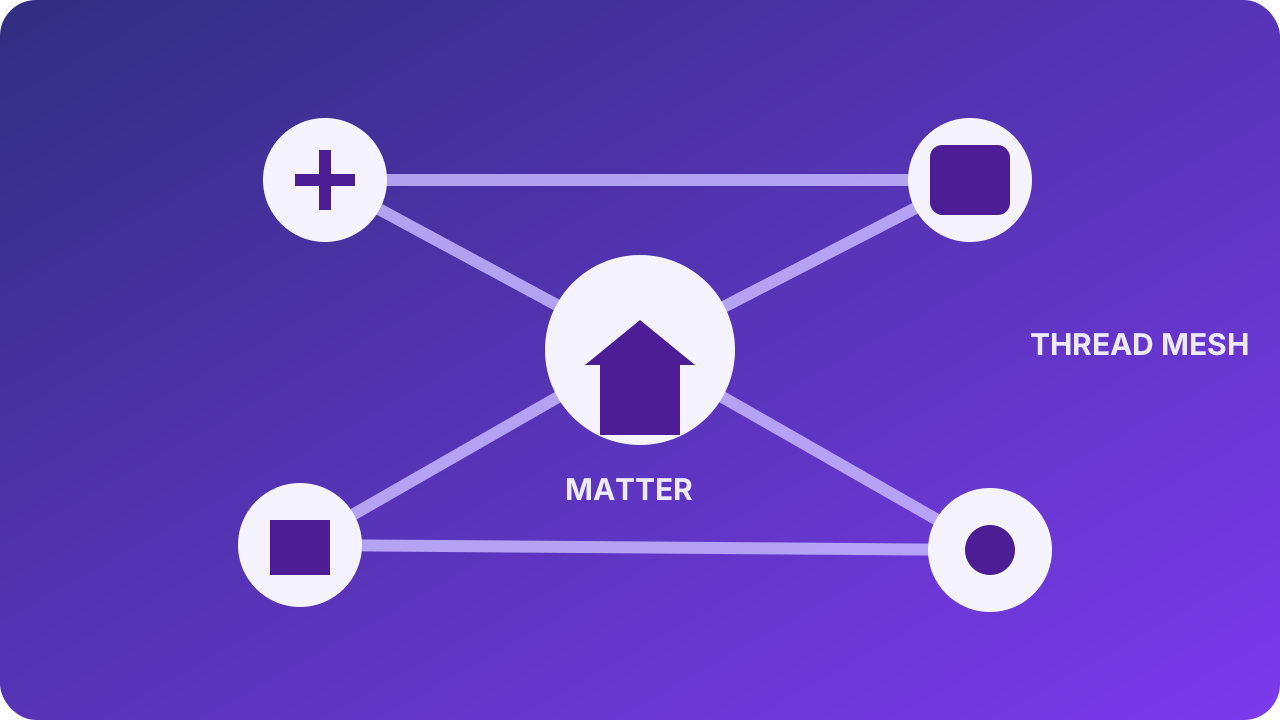
Matter is an application standard; Thread is one network it can use. Knowing the roles prevents buying a compatible-looking device that lacks required infrastructure.
At a glance
The short answer
Look for Matter certification, confirm the device category and ecosystem feature you need, and verify that your home has the correct controller plus a Thread border router when the device uses Thread.
- Who this helps
- People adding cross-brand lights, sensors, locks, switches, and controllers.
- When this may not apply
- You expect one logo to guarantee every advanced feature in every ecosystem.
- Main caveat
- Matter certification improves interoperability, but device categories, platform features, and required network roles still vary.
Why this guide matters
Smart-home packaging mixes protocol names, platform names, hubs, bridges, and radios. The system works more predictably when each role is checked separately instead of assuming that Matter, Thread, Wi-Fi, and Bluetooth are interchangeable.
Matter defines how devices work together
The Connectivity Standards Alliance describes Matter as an open smart-home protocol built on familiar IP technologies. Bluetooth Low Energy is used during setup, while operational connectivity can run over Wi-Fi, Thread, or Ethernet depending on device design.
Matter does not replace the app or platform you prefer. It creates a common application layer that supported platforms can use. The logo confirms certification for supported Matter behavior, but buyers should still check that the desired device type and feature are implemented by both the device and chosen platform.
- Matter: common application language and certification.
- Wi-Fi, Thread, or Ethernet: networks carrying Matter messages.
- Bluetooth Low Energy: commonly used during commissioning, not the main steady-state network.
Thread is a low-power IP mesh
Thread is designed for low-power devices and uses mesh routing. Mains-powered router-capable devices can relay traffic, while sleepy battery devices can spend more time in low-power states. Because Thread is IP-based, a border router forwards traffic between the Thread mesh and networks such as Wi-Fi or Ethernet without acting as a brand-specific application translator.
A Thread border router is infrastructure, not necessarily a separate box. The function may be built into a speaker, display, set-top box, or router. A Thread-based Matter device needs access to a suitable Thread network, so confirm the border-router role before purchase.
- Thread device: the sensor, lock, light, or other endpoint.
- Thread border router: connects the Thread mesh to the rest of the IP network.
- Matter controller: commissions and controls Matter devices within an ecosystem.
Build around functions, not logos alone
Begin with a concrete automation: a motion sensor should activate a light locally, or a lock should be controllable from two household platforms. Confirm each device category, controller support, multi-admin behavior if needed, and whether automations still operate during an internet outage.
Keep the home network healthy. Smart-home reliability depends on Wi-Fi placement, Thread coverage, software updates, and stable controller power. Document which device performs each infrastructure role so replacing a speaker or router does not accidentally remove the only controller or border router.
- Check the exact feature in each ecosystem before buying.
- Prefer local control for routines that must remain responsive.
- Maintain at least one clearly identified controller and required border-router function.
Key considerations
- Matter certification
- Verify the certification and supported device category rather than relying on “works with” wording alone.
- Network transport
- Determine whether the product uses Thread, Wi-Fi, or Ethernet and whether the needed infrastructure exists.
- Platform feature support
- Confirm automations, scenes, remote access, and multi-admin behavior in the platforms your household uses.
- Update and reset path
- Choose products with clear firmware support, ownership transfer, factory reset, and recovery instructions.
How we researched this guide
We used the Connectivity Standards Alliance’s Matter overview and FAQ plus Thread Group explanations of border routers and IP mesh roles. We distinguish certified protocol capability from ecosystem-specific feature availability.
Frequently asked questions
Are Matter and Thread the same thing?
No. Matter is an application protocol. Thread is one IP-based network transport that Matter devices can use, alongside Wi-Fi and Ethernet.
Does every Matter device need a Thread border router?
No. Only Matter devices that communicate over Thread need Thread network access. Wi-Fi or Ethernet Matter devices use those networks instead.
Is a Thread border router the same as a proprietary hub?
Not exactly. A border router forwards IP traffic between Thread and adjacent networks; it does not need to translate a brand-specific application protocol.
Does the Matter logo guarantee every platform feature?
It confirms certified Matter support, but device categories and advanced platform features can differ. Check the current support matrix for the chosen ecosystem.
The takeaway
Choose the automation first, then verify four things: Matter certification, supported device category, transport, and platform feature. If the device uses Thread, identify the border router and controller already in your home before checkout.
Sources
Primary references checked by the editorial team. Product availability and standards may change.
- Matter Frequently Asked Questions — Connectivity Standards Alliance (accessed 2026-08-29)
- What Is a Thread Border Router? — Thread Group (accessed 2026-08-29)